Israel Election Deadlock: Netanyahu Leads as Opposition Closes Gap
Israel’s parliamentary election has produced no clear winner so far. With partial results putting Benjamin Netanyahu’s bloc ahead but short of a majority, opposition leader Gadi Eisenkot faces a difficult path to forming a government.

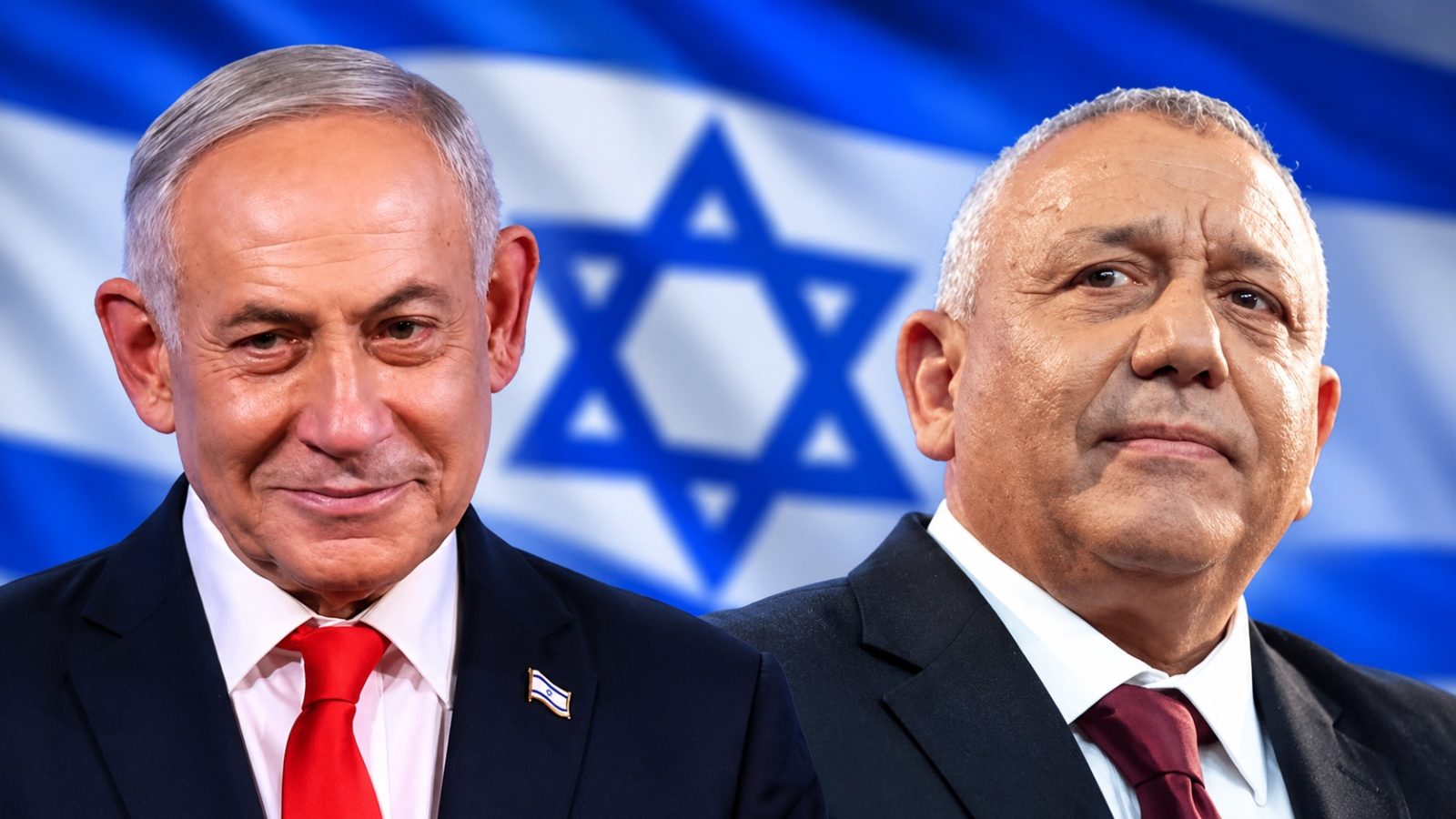
Israel’s parliamentary election has left the country facing a potential political deadlock, with neither Prime Minister Benjamin Netanyahu’s alliance nor the opposition bloc led by Gadi Eisenkot securing a clear path to a majority. As vote counting continued on Wednesday, October 28, preliminary figures showed Netanyahu’s bloc with 55 projected seats, Eisenkot’s bloc with 50, and Arab-led parties with around 15 seats combined.
Israel’s parliament, known as the Knesset, has 120 seats. A government needs the support of at least 61 lawmakers to secure a parliamentary majority. The latest figures therefore leave both major political blocs short of the number required to govern independently.
The election is the country’s first since the Hamas-led attack on Israel on October 7, 2023, and the wars that followed. Netanyahu’s leadership, national security, military service exemptions and the government’s handling of the 2023 attack have been among the central issues in the campaign.
The results remain preliminary, and the distribution of seats could change as more ballots are counted.
Netanyahu and Eisenkot Both Claim a Mandate to Govern
Netanyahu’s Likud party remained the largest individual party in the early count, although the wider coalition supporting him appeared to have lost ground compared with some initial projections.
The prime minister called for the formation of a strong right-wing government and highlighted Israel’s military record and his relationship with US President Donald Trump.
Eisenkot, a former chief of staff of the Israel Defense Forces and leader of the Yashar party, said voters had chosen change. He pledged to work towards forming a government and urged political and security leaders to put the interests of the country and its citizens first.
However, neither leader has an easy route to a majority. Netanyahu has opposed forming a government dependent on Arab-led parties, while Eisenkot and several of his potential partners have also faced political difficulties over whether to cooperate with them.
Trump Takes Credit for Netanyahu’s Improved Position
US President Donald Trump claimed that his support had helped improve Netanyahu’s electoral position.
In a social media post, Trump said the political atmosphere had changed. He argued that what had initially appeared to be a major defeat for Netanyahu had turned into a close contest, with the prime minister still having a chance of winning.
However, the preliminary results alone do not establish that Trump’s endorsement changed the outcome. The final distribution of seats and the negotiations that follow will determine whether Netanyahu can remain in office with a new parliamentary majority.
Arab-Led Parties Could Play a Decisive Role
Arab-led political parties have emerged as an important factor in the election. Their combined representation could prove decisive if neither of the main blocs can secure enough support from other parties.
The Joint List is an alliance associated with the political representation and civil rights of Israel’s Arab citizens. Its constituent parties include Hadash, Ta’al and Balad. The Ra’am party is running separately.
Their political positions differ, but issues such as equality, education, employment, civil rights and the future of relations with Palestinians are important parts of their political platforms.
The increase in their projected representation could give them greater influence during coalition negotiations. However, their role in a future government remains uncertain because both major camps face political resistance to relying on Arab-led parties.
Analysts have warned that even if an agreement becomes possible, maintaining a stable government could prove difficult.
What Happens If Neither Bloc Can Form a Government?
Israel uses a proportional representation system. Voters choose party lists, and seats are allocated according to the share of the vote each party receives, provided it meets the electoral threshold.
After the results are finalised, political negotiations will determine which candidate is best placed to form a government. The president consults political representatives before assigning the task to a candidate considered capable of securing parliamentary support.
The designated candidate normally has 28 days to form a government, with a possible extension of up to 14 days. If the effort fails, another candidate may be given an opportunity under the applicable process.
A government must ultimately secure the Knesset’s confidence. If no viable coalition emerges after the available opportunities are exhausted, Israel could face another election.
Until a new government is formed, Netanyahu may remain in office in a caretaker capacity.
A prolonged stalemate would not automatically mean an immediate new election. Much will depend on negotiations, agreements between parties and whether a candidate can secure sufficient parliamentary support.
Double-Envelope Ballots Could Change the Picture
One important stage of the count involves ballots cast by voters who cannot vote at their regular polling stations. These include military personnel, hospital patients and staff in eligible circumstances, prisoners, diplomats serving abroad and certain voters with disabilities.
These ballots are placed in two envelopes. The outer envelope carries information used to verify the voter’s eligibility and ensure that the person has not voted more than once. Once the checks are complete, the outer envelope is removed and the inner ballot is counted anonymously.
According to the information released during the election, around 500,000 such ballots were expected to be counted from around midnight, with the process potentially continuing into the following evening.
Because the election is closely contested, these votes could affect the final allocation of seats. Their impact will depend on the actual results and the distribution of votes among the parties.
Voter Turnout Reaches a 27-Year High
Turnout reached 77.7 per cent, the highest level since 1999, according to figures released by Israel’s Central Elections Committee. Participation was substantially higher than at the equivalent stage of the 2022 election.
Voting among Arab Israeli citizens was also reported to have increased significantly. Their participation could influence the final balance of power in the Knesset, particularly if the major political blocs remain short of a majority.
Military personnel began voting ahead of election day, including active-duty soldiers, career service members and reservists. The military reported a turnout rate of 79.9 per cent among its personnel, an increase compared with the previous election.
The high overall turnout reflects the importance of the election amid continuing security concerns and divisions over the government’s leadership.
Four Major Issues Shaping the Election
1. Accountability for the October 7 attack
The Hamas-led attack on October 7, 2023, and the failure to prevent it have remained major points of political contention. Opposition parties have called for accountability and a thorough investigation into the security and intelligence failures that preceded the attack.
2. Military service exemptions
Exemptions from military service for many ultra-Orthodox Jewish men have become a major political issue. Critics argue that military and national service responsibilities should be shared more broadly, while religious parties have sought to protect existing arrangements.
Netanyahu’s political alliances have included ultra-Orthodox parties. Eisenkot has advocated a broader framework for military or civilian service.
3. The role of the Supreme Court
Netanyahu’s earlier efforts to limit the powers of the Supreme Court triggered widespread protests and deepened divisions over the balance of power between the judiciary, government and parliament. The issue remains an important point of disagreement between the government and its opponents.
4. National security and the future of the wars
Security policy has been central to the campaign, including the conflict with Hamas, tensions involving Hezbollah and the broader threat posed by Iran. Netanyahu has promised to continue confronting Israel’s adversaries, while the opposition has questioned the government’s leadership and its handling of national security.
Netanyahu and Eisenkot Have Both Experienced Personal Losses in War
Netanyahu served in Israel’s elite Sayeret Matkal special forces unit before entering politics. His older brother, Yonatan Netanyahu, was killed in 1976 during the Entebbe hostage-rescue operation in Uganda.
Eisenkot began his military career in the Golani Brigade and later became chief of staff of the Israel Defense Forces, serving from 2015 to 2019. His family also suffered losses during the Gaza war: his son, Gal Eisenkot, was killed in December 2023, followed by the death of his nephew, Maor Cohen Eisenkot, in fighting in southern Gaza.
Their military backgrounds and personal experiences have formed part of their public profiles, but the election’s outcome will ultimately depend on the parliamentary numbers and the ability of political parties to reach agreements.
What Happens Next?
The immediate priority is to complete the vote count and establish the final distribution of seats. Political leaders will then have to negotiate with other parties to assemble a government that can command the confidence of the Knesset.
Netanyahu’s bloc currently has the advantage in the partial count, but it remains short of the 61-seat threshold. Eisenkot’s opposition bloc also faces a difficult path, particularly because cooperation with Arab-led parties remains politically contentious.
The election has therefore produced an uncertain result rather than a decisive victory for either side. Whether Israel gets a new government through coalition negotiations or eventually returns to the polls will depend on the final results and the willingness of rival parties to compromise.
Report a mistake
Related stories
20-Year-Old Co-Pilot’s Mayday Calls Before Fatal Florida Plane Crash Revealed
Arab Citizens of Israel: From Political Marginalisation to a Potential Kingmaker in Government Formation

UAE Honours flydubai Crew for Courage During September In-Flight Incident
Reader comments (0)
No comments yet. Be the first.