Arab Citizens of Israel: From Political Marginalisation to a Potential Kingmaker in Government Formation
Arab-led parties have secured a historic 19 seats in Israel’s 2026 parliamentary election, making their support potentially decisive in government formation. Their rise reflects decades of political struggle, exclusion and growing participation.

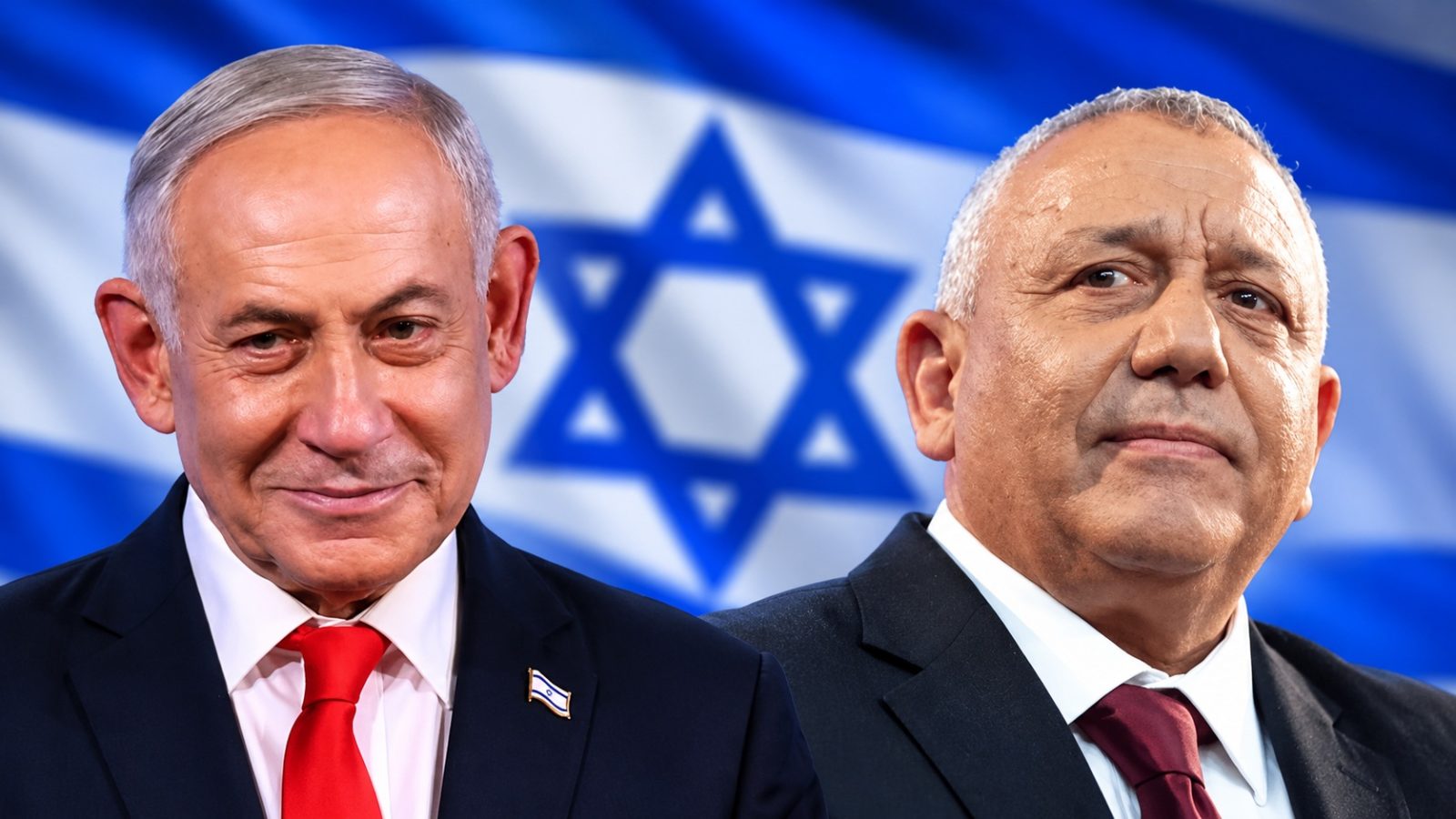
A significant political shift is unfolding in Israel, where Arab citizens are emerging as an increasingly influential force in national politics. Representing approximately 21 per cent of the country's population, the Arab community has moved beyond its historically limited role in parliamentary politics and is now in a position to influence government formation.
The outcome of Israel's 2026 parliamentary election has brought this change into sharp focus. Prime Minister Benjamin Netanyahu's Likud party emerged as the largest individual party with 27 seats. However, the broader right-wing bloc supporting him secured only 53 seats, falling short of the 61 required for a parliamentary majority.
The opposition bloc led by former military chief Gadi Eisenkot secured 48 seats. Meanwhile, the two Arab-led political formations, the Joint List and Ra'am, won a combined 19 seats, marking a historic high for Arab political representation in the Knesset.
These results have placed Arab-led parties in a potentially decisive position. Their support could help determine which political leader succeeds in forming the next government. However, the two parties remain separate political organisations, and their support for any future coalition cannot be taken for granted.
To understand why this development matters, it is important to examine the history of Arab citizens in Israel, their political struggles and the gradual expansion of their representation.
Why Are Arab Parties in Israel in the Spotlight?
The main reason Arab-led parties have attracted attention is their performance in the 2026 Israeli parliamentary election.
Israel has a parliamentary system with 120 seats in the Knesset. A political party or coalition needs the support of at least 61 lawmakers to secure a majority.
The latest election results have produced a divided parliament:
Likud: Benjamin Netanyahu's party won 27 seats.
Netanyahu-led bloc: The wider right-wing coalition secured 53 seats.
Opposition bloc: The alliance led by Gadi Eisenkot secured 48 seats.
Arab-led parties: The Joint List and Ra'am secured 19 seats combined.
Neither of the two main political blocs has secured the required majority independently.
This is where Arab-led parties become important. If opposition parties seek to replace Netanyahu, they may need the support of Arab representatives to reach the majority threshold.
However, political differences within the opposition and resistance among some parties to cooperating with Arab-led organisations could complicate negotiations.
The election has therefore placed the political representation of Arab citizens at the centre of Israel's government formation process.
Understanding the Formation of Israel
To understand the history of Arab citizens in Israel, it is necessary to look back at the period following the Second World War.
After the Holocaust and the persecution of Jewish communities in Europe, international support for the establishment of an independent Jewish homeland increased.
On November 29, 1947, the United Nations General Assembly adopted Resolution 181, commonly known as the UN Partition Plan.
The resolution recommended dividing British Mandate Palestine into two independent states:
A Jewish state.
An Arab state.
The plan also proposed an international regime for Jerusalem.
The proposal was accepted by the Jewish leadership in Palestine but rejected by Arab leaders and neighbouring Arab states. The disagreement over partition contributed to escalating violence in the territory.
The Establishment of Israel in 1948
On May 14, 1948, David Ben-Gurion declared the establishment of the State of Israel as the British Mandate came to an end.
The declaration was followed by the first Arab-Israeli war, which resulted in major territorial and demographic changes.
Many Palestinians fled or were expelled from their homes during the 1948 war, becoming refugees. However, a substantial Palestinian Arab population remained within the territory that became Israel.
Those who remained became citizens of the newly established state, although their political and social circumstances were significantly different from those of the Jewish majority.
The events of 1948 created a political and historical divide that continues to influence relations between Israel's Jewish and Arab populations.
The Early Struggles of Arab Citizens in Israel
One of the less discussed aspects of Israel's early history is the experience of the Arab population that remained within its borders after 1948.
Although Arab residents were granted Israeli citizenship and the right to vote, their early years as citizens were marked by significant restrictions.
From 1948 until 1966, Arab citizens in much of the country lived under a military administration. Their movement between localities could require military permits, and the administration exercised considerable control over their daily lives.
These restrictions affected economic opportunities, political organisation and access to public life.
Consequently, developing independent political leadership and organising around community rights remained difficult during the early decades of the Israeli state.
The military government over Arab communities was formally abolished in 1966, opening the way for greater political and social participation.
How Did Arab Political Representation Begin?
During the early years of Israel, Arab representation in the Knesset was largely channelled through political lists affiliated with the country's dominant Jewish political establishment, particularly Mapai, the predecessor of the Labour Party.
These lists provided Arab candidates with opportunities to enter parliament, but they did not necessarily represent fully independent Arab political organisations.
Research published in Israel Affairs describes how such satellite lists remained an important feature of Arab parliamentary representation between 1949 and 1977.
Their influence gradually declined as Arab political leadership developed and demands for independent representation became stronger.
The Rise of Independent Arab Political Organisations
The 1970s and 1980s marked an important period in the development of independent Arab political representation.
One significant development was the establishment of Hadash, the Democratic Front for Peace and Equality, in 1977.
Hadash emerged from a merger involving the Rakah communist party and other left-wing movements. It brought Arab and Jewish political activists together on a platform emphasising equality, social justice, workers' rights and peace.
The nationalist political movement also developed over time. Balad, established in 1996, became another important organisation representing Arab political aspirations.
The Progressive List for Peace, which included both Arab and Jewish politicians, also secured parliamentary representation between 1984 and 1992.
These developments helped create a more diverse political landscape in which Arab citizens could express their interests through different ideological and political platforms.
How Much Influence Do Arab Parties Have in the Knesset?
Israel's electoral system is based on nationwide proportional representation.
Voters cast their ballots for political party lists rather than directly electing a prime minister. Parliamentary seats are allocated according to the share of valid votes received by each qualifying party.
A party must secure at least 3.25 per cent of the valid vote to enter the Knesset.
Because no single party has historically secured an outright parliamentary majority, Israeli governments are generally formed through coalitions involving multiple political parties.
This system gives smaller parties considerable bargaining power, particularly when the leading political blocs are closely matched.
The 2026 election has demonstrated this dynamic once again. With 19 seats between them, the Arab-led parties could potentially influence the formation of a government, although their political positions and willingness to cooperate with other parties will determine how much influence they actually exercise.
Understanding the Joint List and Ra'am
Two major Arab-led political formations have emerged as important players in Israel's parliamentary politics: the Joint List and Ra'am.
Although they share some concerns regarding the rights and representation of Arab citizens, they differ in their political backgrounds and approaches.
1. The Joint List
The Joint List was established in 2015 as an electoral alliance bringing together four political parties:
Hadash
Ta'al
Balad
Ra'am
The alliance was formed partly in response to the increase in Israel's electoral threshold.
It initially secured 13 seats in the 2015 election and became an important platform for Arab political representation.
However, internal differences eventually led to changes in its composition. Ra'am left the alliance before the 2021 election.
The Joint List subsequently continued through cooperation among Hadash, Ta'al and Balad.
In the 2026 election, the Joint List secured 11 seats.
2. Ra'am – United Arab List
Ra'am, also known as the United Arab List, was established in 1996.
The party is associated with the Southern Islamic Movement and is led by Mansour Abbas.
Its political approach has placed considerable emphasis on practical issues affecting Arab communities, including housing, education, employment, infrastructure and public safety.
Ra'am gained national attention during the 2021 political negotiations when it joined the coalition supporting the government led by Naftali Bennett and Yair Lapid.
This was a historic development because Ra'am became the first independent Arab party to formally join an Israeli governing coalition.
The move demonstrated that an Arab political party could participate directly in government formation rather than limiting itself to parliamentary opposition.
In the 2026 election, Ra'am secured eight seats.
Why Is Arab Political Participation Important?
Arab citizens account for approximately 21 per cent of Israel's population, representing around two million people.
Despite their significant demographic presence, Arab political participation has historically faced several challenges, including political marginalisation, social inequality and divisions within the community itself.
Over time, issues affecting Arab localities have become increasingly important in electoral campaigns.
Some of the major concerns include:
Education: Improving educational facilities and reducing gaps between Arab and Jewish communities.
Healthcare: Expanding access to medical services and healthcare infrastructure.
Employment: Creating better employment opportunities and addressing economic inequality.
Public safety: Tackling organised crime, violence and inadequate policing in Arab communities.
Infrastructure: Improving housing, roads, public transport and municipal services.
Political equality: Securing equal representation and participation in national decision-making.
These issues have encouraged political organisations to focus not only on national and ideological questions but also on practical concerns affecting everyday life.
Why Could Arab Parties Become Kingmakers?
The term 'kingmaker' is used in parliamentary politics to describe a political party or group whose support can determine who forms the government.
Israel's 2026 election has created precisely this kind of situation.
Netanyahu's bloc has 53 seats, while Eisenkot's opposition bloc has 48. The combined 19 seats won by the Joint List and Ra'am could potentially provide the additional parliamentary support needed to reach the majority of 61.
However, the political situation is complicated.
Several opposition leaders have expressed reservations about forming a government with Arab-led parties. Some have ruled out including them in a coalition, while others may consider outside parliamentary support or alternative arrangements.
The two Arab-led formations may also have different priorities and negotiating positions.
Therefore, winning 19 seats does not automatically guarantee that they will form part of the next government.
Nevertheless, their electoral strength gives them a significant opportunity to influence political negotiations and demand attention to issues affecting Arab citizens.
A New Chapter in Israel's Political History
The rise of Arab-led parties in Israel represents an important development in the country's parliamentary politics.
For decades, Arab citizens experienced political restrictions, limited independent representation and difficulties in securing equal participation in national decision-making.
Today, their elected representatives hold a combined 19 seats in the Knesset, giving them a potentially decisive role in determining the country's next government.
However, the real significance of this development goes beyond the arithmetic of parliamentary seats.
It raises wider questions about political equality, minority representation, democratic participation and the future relationship between Israel's Jewish majority and Arab minority.
Whether this electoral success translates into direct participation in government or greater influence from outside the coalition will depend on the negotiations ahead.
One thing is clear: Arab-led parties can no longer be treated as marginal players in Israel's national political calculations.
Report a mistake
Related stories
Gujarat ATS Takes Salim Ismail Dola into Custody in ₹438-Crore Vadodara Drug Case
BMC Should Repost Dia Mirza’s Pollution-Free Diwali Video: Deputy Mayor Sanjay Ghadi
Gujarat CM Bhupendra Patel Inaugurates ₹48.22-Crore Modern Hospital in Vapi

Reader comments (0)
No comments yet. Be the first.