Azerbaijan’s School Hijab Restrictions Spark Protests in Muslim-Majority Country, Tensions With Türkiye
Azerbaijan’s revised school dress code has led to hijab-wearing students and teachers being denied entry, triggering protests, detentions and criticism over religious freedom.

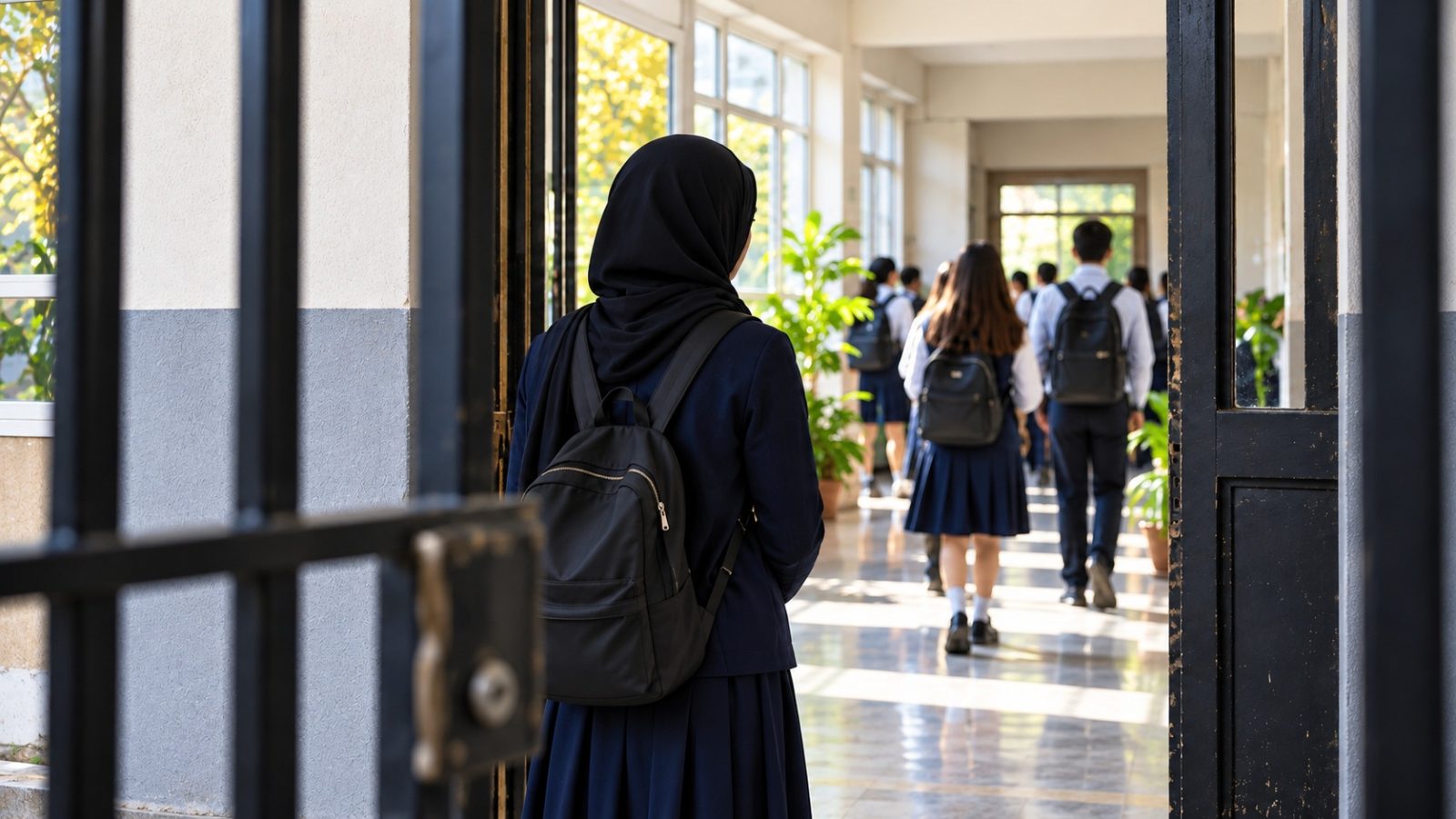
Azerbaijan, where around 96% of the population identifies as Muslim, is facing protests after revised school uniform rules were used to restrict the wearing of hijabs in public schools.
The government has not introduced a rule that directly names the hijab as prohibited. Instead, an amendment approved in September 2026 restricts clothing considered inconsistent with the principle of secular education.
However, some schools have reportedly stopped students and teachers wearing hijabs from entering classrooms. The enforcement of these rules has triggered protests, student boycotts and a wider debate about the right to practise religion in public institutions.
The government’s stated position is that schools should follow a common dress code. Critics argue that the rules effectively prevent Muslim women and girls from expressing their religious beliefs through their clothing.
What does Azerbaijan’s Constitution say?
The controversy is significant because Azerbaijan’s Constitution contains provisions on both secular government and religious freedom.
Article 7 defines Azerbaijan as a secular state. Article 18 separates religion from the state and says the public education system must be secular. At the same time, Article 48 guarantees freedom of conscience and the right to practise or not practise a religion.
This creates the central question in the dispute: does a common school uniform policy justify restricting religious head coverings?
The government’s supporters argue that secular education requires common rules for students. Critics say that secularism does not necessarily mean removing all visible signs of religion from schools.
The constitutional provisions do not, by themselves, settle the specific question of whether the revised dress code is lawful. That would depend on the rules’ legal basis, how they are applied and how courts interpret the competing rights.
Students boycott classes; 37 people detained
The restrictions have led to protests in Azerbaijan, with local media reporting class boycotts at at least two schools.
Videos circulated on social media showed students crying and embracing teachers after reportedly being refused entry because of their headscarves.
Teacher Zahra Hasanova told Al Jazeera that she had been informed she could no longer wear her hijab at school. She described the decision as hurtful and argued that wearing or removing the headscarf should be a personal choice.
Another teacher, Gulshan Aliyeva, told Al Jazeera that she was denied entry to her school in Baku while wearing a headscarf. She said her daughter was also prevented from entering her school.
Azerbaijan’s Interior Ministry said 37 people had been detained for disrupting public order in connection with the protests and the enforcement of the new rules.
The Baku City Education Department also announced that schools would be monitored to check compliance with the dress code.
Imprisoned journalist begins hunger strike
The controversy has also drawn attention from imprisoned journalist Polad Aslanov, who began a hunger strike in protest against the restrictions.
Aslanov was convicted of high treason in 2020. In a message shared on Facebook by his wife, Gulmira Aslanova, he said he was protesting what he described as violations of constitutional rights.
Separately, reports of internet shutdowns circulated online. However, internet monitoring organisations cited by Al Jazeera had not confirmed a blackout. The claim should therefore not be treated as established fact.
Why is Türkiye criticising Azerbaijan’s decision?
The dispute has reached Türkiye, one of Azerbaijan’s closest international partners.
Last week, protesters gathered outside Azerbaijan’s consulate in Istanbul to oppose the restrictions. The issue has revived memories of Türkiye’s own history of headscarf restrictions, particularly the period when women wearing headscarves faced barriers in universities and some public institutions.
Oktay Saral, an adviser to Turkish President Recep Tayyip Erdoğan, criticised Azerbaijan’s policy, calling it “unacceptable”. He questioned how a student could be turned away from school for covering her head because of her faith.
Azerbaijan’s ruling New Azerbaijan Party responded by describing Saral’s comments as irresponsible and warning that such statements could damage relations between the two countries.
The disagreement is notable because the two governments have close political and strategic ties. However, criticism from a Turkish presidential adviser should not automatically be treated as an official change in Türkiye’s foreign policy.
Azerbaijan’s government and supporters defend the rules
Supporters of the revised policy argue that the restrictions are about maintaining a uniform school environment, not banning Islam.
Zahid Oruj, chairman of the human rights committee of Azerbaijan’s parliament, told Al Jazeera that the measure was not religious discrimination. He said there was no general ban on wearing headscarves outside school and described the objective as maintaining uniform rules in educational institutions.
Some residents have also argued that religious practices should not influence public education and that students should follow the government’s dress code.
The chairman of the Caucasus Muslims Board, Sheikh-ul-Islam Allahshukur Pashazade, described the hijab as an important religious obligation. However, he also criticised protesters for disrupting schools and said the issue should be raised with the relevant government authorities.
Other voices have called for compromise. Natiq Jafarli, head of the opposition REAL Party, said the question needed further discussion and suggested that arrangements could be considered for younger students. He also opposed imposing clothing restrictions on adult teachers.
What is the larger issue?
The controversy is not simply about whether a school uniform should be the same for everyone. It concerns how a secular state balances public rules with individual religious freedom.
A uniform policy can set common standards for students, but its application may raise questions when it prevents children from attending classes or teachers from doing their jobs because of religious clothing.
The government’s position is that secular education and common dress rules must be maintained. Critics argue that religious freedom and equal access to education should also be protected.
Azerbaijan’s constitutional guarantees make the legal question particularly important. A clear explanation of the rule, consistent enforcement and access to legal remedies would help establish whether the restrictions are compatible with the country’s fundamental rights.
For now, protests and detentions have made the issue more serious, while the public disagreement with Türkiye has added a diplomatic dimension. The outcome will depend on how Azerbaijan’s authorities enforce the rules and whether affected students and teachers challenge them through legal channels.
- Al Jazeera — Azerbaijan’s School Hijab Ban: What’s Behind It, and What’s Next?
- Al Jazeera — Tensions With Teachers, Pupils and Türkiye: Inside Azerbaijan’s Hijab Row
- Constitution of Azerbaijan — Official Website of the President
- Al Jazeera — Azerbaijan School Pupils Protest Over Reported Hijab Restrictions
Report a mistake
Related stories
20-Year-Old Co-Pilot’s Mayday Calls Before Fatal Florida Plane Crash Revealed
Israel Election Deadlock: Netanyahu Leads as Opposition Closes Gap
UAE Honours flydubai Crew for Courage During September In-Flight Incident
Reader comments (0)
No comments yet. Be the first.