Birth of Britain’s Labour Movement: How the Labour Party Began
On 27–28 February 1900, trade unionists and socialist organisations joined forces to establish the Labour Representation Committee, laying the foundations for the modern British Labour Party.

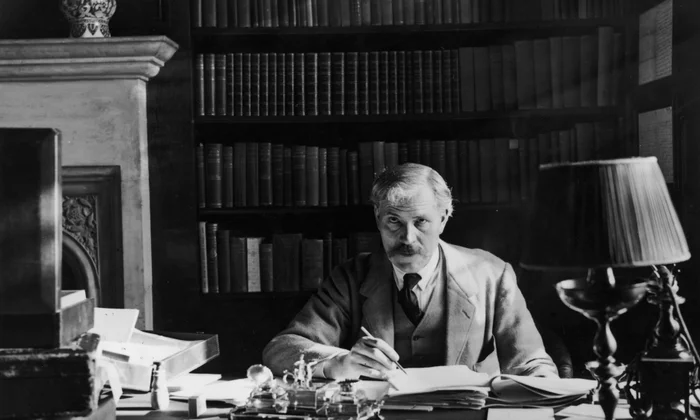
On 27 February 1900, a gathering of trade unionists and socialist organisations in London marked a turning point in British political history. Their discussions led to the formation of the Labour Representation Committee (LRC), an organisation created to secure a stronger and more independent voice for working people in Parliament. The committee became the foundation of the Labour Party, which adopted its name in 1906.
The new organisation emerged from growing dissatisfaction among workers who believed that the established Conservative and Liberal parties did not adequately represent their interests. Although trade unions and socialist groups had campaigned for better working conditions and social reform for decades, their political efforts had often remained divided.
The LRC sought to bring these different groups together and increase the number of representatives in Parliament who would support workers’ rights and labour-related legislation.
The Roots of Britain’s Labour Movement
The creation of the LRC followed decades of campaigning for workers’ rights and political representation. Reformers such as Robert Owen and the Chartists had helped bring questions of economic inequality, working conditions and voting rights into public debate during the nineteenth century.
The extension of voting rights to working men created new opportunities for political participation. However, the labour movement struggled to translate its growing influence into a consistent parliamentary presence.
Many trade union leaders had previously supported Liberal candidates, while socialist organisations advocated different approaches to political and economic reform. The establishment of the LRC offered a way to coordinate these efforts without requiring every participating organisation to abandon its individual identity.
The Organisations Behind the New Committee
The Labour Representation Committee brought together trade unions and socialist groups with different political traditions.
The Independent Labour Party (ILP), founded in 1893, advocated independent political representation for working people. Its leading figures included James Keir Hardie, who played an important role in the development of the labour movement.
The Trades Union Congress (TUC), established in 1868, provided a national platform for trade unions. Its support was crucial because organised workers could contribute both membership and financial resources to the new political organisation.
The Social Democratic Federation (SDF), led by Henry Hyndman, represented a more explicitly socialist and Marxist tradition. Hyndman had published England for All in 1881, a work associated with the development of socialist ideas in Britain.
The Fabian Society, founded in 1884, represented another strand of socialist thought. Its members favoured gradual social reform and constitutional methods rather than revolutionary change.
Although these organisations disagreed on political strategy and ideology, they shared an interest in increasing labour representation in Parliament.
Ramsay MacDonald Becomes the Committee’s First Secretary
James Ramsay MacDonald was appointed the first secretary of the Labour Representation Committee. Born in Lossiemouth, Scotland, in 1866, he became an important figure in the development of British parliamentary socialism.
MacDonald had joined the Independent Labour Party in 1895 and was involved in efforts to establish a distinct political organisation for working people.
The LRC provided a platform through which trade unions and socialist groups could coordinate electoral activity and support candidates committed to labour representation.
Its early electoral progress was limited. At the 1900 general election, the committee fielded 15 candidates, of whom two were elected. Nevertheless, the result established a parliamentary foothold for the new organisation.
From the Labour Representation Committee to the Labour Party
The LRC gained further support as the demand for independent working-class representation grew. The legal and political challenges faced by trade unions also strengthened arguments for a more coordinated political voice.
The organisation made significant progress in the 1906 general election, when its candidates won 29 seats. Following the election, the committee adopted the Labour Party name, marking a major step in the development of a distinct national political force.
The change did not immediately bring Labour into government. The party continued to develop its organisation, parliamentary influence and political programme over the following years.
In the December 1923 general election, Labour won 191 seats. With the Conservatives lacking a parliamentary majority and the Liberals unwilling to form a coalition with them, Ramsay MacDonald became prime minister in January 1924, leading Britain’s first Labour government.
A Turning Point in British Political History
The establishment of the Labour Representation Committee in 1900 was an important step in the movement to give organised labour a stronger voice in national politics.
Rather than representing a single socialist ideology, the committee brought together trade unionists and political groups with different approaches to reform. Its early electoral achievements were modest, but it created an organisational foundation that enabled Labour to expand its parliamentary presence.
The formation of the LRC also reflected a wider change in British democracy: the growing recognition that working people needed a political organisation capable of representing their interests independently.
More than two decades after its establishment, the movement reached a historic milestone when Ramsay MacDonald entered Downing Street as Britain’s first Labour prime minister in 1924.
Reader comments (0)
No comments yet. Be the first.