Delhi Protest: CJP Founder Abhijeet Dipke Arrested, AISA Chief Neha Bora Released; What Are the Legal Charges?
Delhi Police arrested CJP founder Abhijeet Dipke under preventive provisions and released AISA chief Neha Bora after Friday’s protest crackdown. The action has intensified debate over the right to protest and electoral accountability.

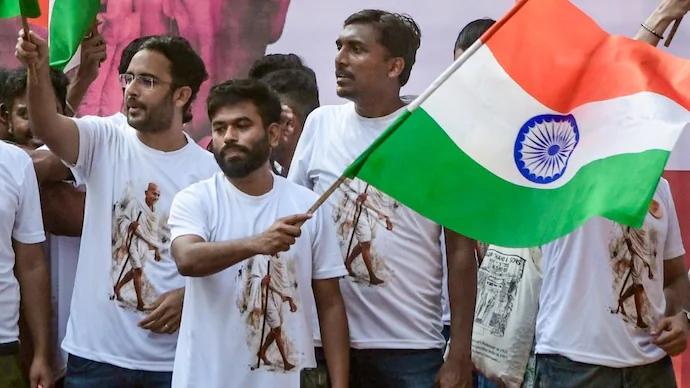
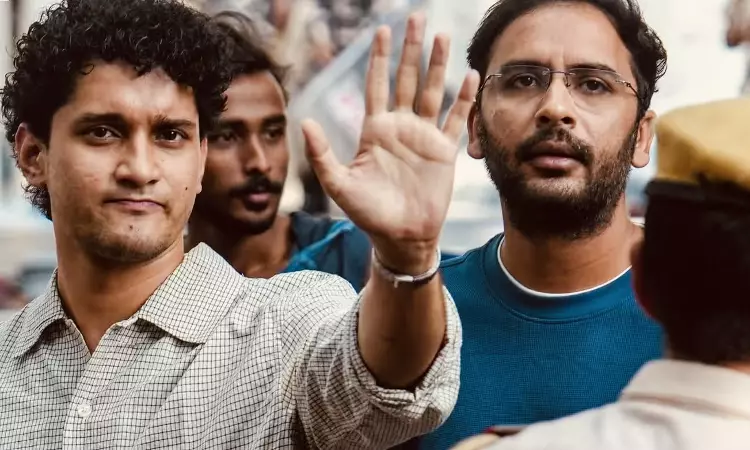
Delhi Police placed Cockroach Janta Party (CJP) founder Abhijeet Dipke under preventive arrest and released All India Students’ Association (AISA) president Neha Bora early Saturday morning, October 17, following their detention ahead of a planned protest march in Connaught Place.
The march, called ‘Lehra Do Tiranga’, was organised to demand the resignation of Chief Election Commissioner (CEC) Gyanesh Kumar over allegations concerning electoral rolls and the Election Commission’s Special Intensive Revision (SIR) exercise.
According to Delhi Police, Dipke was arrested under Sections 126 and 170 of the Bharatiya Nagarik Suraksha Sanhita (BNSS), 2023, in connection with concerns about a possible breach of peace. He was scheduled to appear before a Special Executive Magistrate (SEM) later on Saturday.
Bora, meanwhile, was released after the completion of formalities relating to her detention under Section 65 of the Delhi Police Act.
The two leaders had been detained on Friday while travelling to participate in the proposed demonstration. Their detention prompted protests and concerns from political groups, student organisations and civil society representatives.
Why Was Abhijeet Dipke Arrested?
Delhi Police cited preventive legal provisions, saying the action was linked to apprehensions about a possible breach of peace.
Preventive action is different from an arrest following the investigation of an alleged crime that has already taken place. Its purpose is to prevent a potential offence or disturbance before it occurs.
The police initiated action against Dipke under two provisions of the BNSS.
Section 126: Security for keeping the peace
This provision allows an Executive Magistrate to initiate proceedings when there is information that a person is likely to disturb public peace or commit a breach of peace. The person may be required to explain why they should not be ordered to provide a bond to maintain peace.
In simple terms, the authorities can begin legal proceedings to require someone to undertake that they will maintain public order.
Section 170: Arrest to prevent a cognizable offence
This provision gives police the power to arrest a person without a warrant when they know of a plan to commit a cognizable offence and believe that the offence cannot otherwise be prevented.
The provision also limits detention under this particular power to 24 hours unless further detention is authorised under another applicable legal provision.
These provisions do not automatically establish that the person has committed a crime. The legality and necessity of the action depend on the circumstances, the evidence and compliance with the law.
Dipke was expected to be produced before a Special Executive Magistrate, where the preventive proceedings could be considered. The outcome of that appearance was not established in the information available for this report.
CJP Says Dipke’s Location Was Unknown
CJP legal head Ratna Singh raised concerns about Dipke’s whereabouts and access to legal assistance.
In a post on X, Singh said that Dipke had been arrested and would be produced before the SEM court, but alleged that his location remained unknown and that lawyers had not been allowed to meet him.
The party had earlier claimed that police took Dipke to an undisclosed location and that it was unable to contact him after his detention.
These statements represent the party’s allegations. They should be distinguished from independently verified facts about his custody and access to legal counsel.
The dispute over his whereabouts added to concerns surrounding the police operation and the treatment of protesters.
Why Was Neha Bora Released?
AISA president Neha Bora was released early Saturday after the authorities completed the formalities relating to her detention under Section 65 of the Delhi Police Act.
Following her release, Bora criticised the use of preventive detention against protesters. She alleged that people were being detained without valid reasons and held for hours before being released, sometimes the following morning.
Bora argued that such actions were intended to create fear among ordinary citizens and discourage them from participating in protests.
She also demanded the immediate release of Dipke and other detained demonstrators.
According to Bora, the protesters were ordinary citizens seeking accountability and defending their right to vote. She questioned why people demanding political and electoral accountability should be held at police stations overnight.
Her remarks reflect the position of AISA and the protesting groups. The legality of each detention would need to be assessed on its own facts and applicable law.
What Is the ‘Lehra Do Tiranga’ Protest About?
The ‘Lehra Do Tiranga’ march is part of a wider campaign by the CJP, student groups, opposition parties and civil society organisations demanding the resignation of Chief Election Commissioner Gyanesh Kumar.
The demonstrators have raised concerns about alleged irregularities in electoral rolls and the Election Commission’s Special Intensive Revision process.
SIR is an exercise to review and update voter lists. The process can involve checking existing entries, verifying voter details, identifying duplicate or ineligible entries, and adding eligible voters who may be missing from the rolls.
The objective of maintaining accurate electoral rolls is to ensure that eligible citizens can vote and that electoral records are reliable.
However, disputes can arise if voters believe their names have been removed incorrectly, if verification procedures are difficult to complete, or if the process is perceived as unfair.
The protesters allege that the revision exercise raises questions about electoral fairness and accountability. The Election Commission’s position and the evidence supporting specific allegations must be considered separately before drawing conclusions about whether irregularities occurred.
A key distinction: Demanding an investigation or the resignation of an official does not itself prove wrongdoing. Equally, allegations concerning electoral rolls can be examined through evidence, transparent procedures and appropriate legal remedies.
Why Are Protesters Demanding the CEC’s Resignation?
The Chief Election Commissioner heads the Election Commission of India, the constitutional body responsible for administering elections to Parliament, state legislatures and the offices of the President and Vice-President.
The Commission performs important functions, including supervising electoral rolls, organising elections, enforcing applicable election rules and overseeing the conduct of political parties and candidates under the relevant legal framework.
The protesters want Gyanesh Kumar to resign because they allege that the handling of electoral-roll revisions has raised serious concerns about fairness and accountability.
Their demand has become part of a wider political dispute involving opposition parties, student organisations and the ruling establishment.
However, the removal of a Chief Election Commissioner is governed by constitutional safeguards. A demand for resignation is a political demand; it does not, by itself, remove an officeholder or establish that the official has violated the law.
The substantive questions about voter-list revisions require examination of the Election Commission’s procedures, objections raised by affected voters, available records and any relevant judicial findings.
What Is the Difference Between Detention and Arrest?
The distinction is important for understanding this case.
Detention generally refers to a person being held in custody or having their freedom restricted. It can occur under different legal powers and does not necessarily mean that criminal charges have been formally brought.
Arrest is a formal legal action that places a person in custody under an applicable power of law. An arrest may occur in connection with an alleged offence or, in some circumstances, to prevent a potential offence.
Preventive action is intended to stop a possible breach of law or public peace before it occurs. It is not the same as a finding of guilt.
In Dipke’s case, police cited preventive provisions of the BNSS and planned to produce him before a Special Executive Magistrate. Bora was released after the formalities associated with her detention were completed.
These developments do not, on their own, establish guilt or resolve the dispute over the legality of the police action.
What Does This Mean for the Right to Protest in India?
The Indian Constitution protects freedom of speech and expression and the right to assemble peacefully without arms under Article 19.
These rights are fundamental to a democratic system because citizens must be able to express disagreement, criticise public officials and demand accountability.
However, the rights are subject to constitutionally permitted reasonable restrictions. Authorities can regulate assemblies to address legitimate public-order and safety concerns, subject to the law.
The key question in any particular case is whether the police action was legally justified, necessary and proportionate to the circumstances.
A preventive arrest cannot be assessed solely on the basis that a protest was planned. Equally, the right to peaceful assembly does not automatically remove every legal restriction on public gatherings.
In this case, the police cited concerns about a possible breach of peace, while the protesting organisations questioned the necessity and purpose of the detentions.
A complete assessment would require the relevant police records, the grounds communicated to those detained, the applicable orders and any subsequent directions from the competent authority or court.
What Happens Next?
The immediate legal development was Dipke’s scheduled appearance before the Special Executive Magistrate. The outcome of those proceedings will determine the next steps in his preventive case.
Meanwhile, the wider political dispute over the SIR exercise and the demand for the Chief Election Commissioner’s resignation remains unresolved.
Three developments will be important to watch:
Dipke’s legal proceedings: Whether the SEM issues any further order and whether the preventive action continues.
Access to legal assistance: Whether the concerns raised by CJP about Dipke’s location and access to lawyers are addressed.
The electoral-roll dispute: Whether the Election Commission, political parties or courts provide further clarification on the allegations concerning SIR.
The Bottom Line
The detention of Abhijeet Dipke and Neha Bora’s subsequent release have brought renewed attention to the balance between public order and the right to protest.
Delhi Police cited preventive legal provisions in Dipke’s case, while CJP and AISA alleged that the detentions were unjustified and raised concerns about access to legal assistance.
The wider protest concerns alleged irregularities in electoral rolls and the Special Intensive Revision exercise. Those allegations require evidence-based scrutiny and should not be treated as established findings without independent verification.
For ordinary citizens, the central issues are straightforward: eligible voters must be able to exercise their voting rights, public authorities must follow the law, and peaceful protests must be handled in accordance with constitutional protections and legitimate public-order requirements.
The legal proceedings and any subsequent findings will be important in determining how this particular dispute develops.
Report a mistake
Related stories
Diljit Dosanjh Responds to Critics: “Don’t Teach Punjabis How to Fight”
SC Notice to Centre on Privacy Law as News Publishers Warn It Could Shut Newsrooms
K Annamalai Questions Centre Over CJP Protest Crackdown, Jantar Mantar Ban and Police Action
Reader comments (0)
No comments yet. Be the first.