How a Bill Becomes Law: What Happens During Parliament’s Session
From its introduction in Parliament to debate, committee scrutiny, voting and the President’s assent, an ordinary Bill has to pass through several stages before it becomes a law.

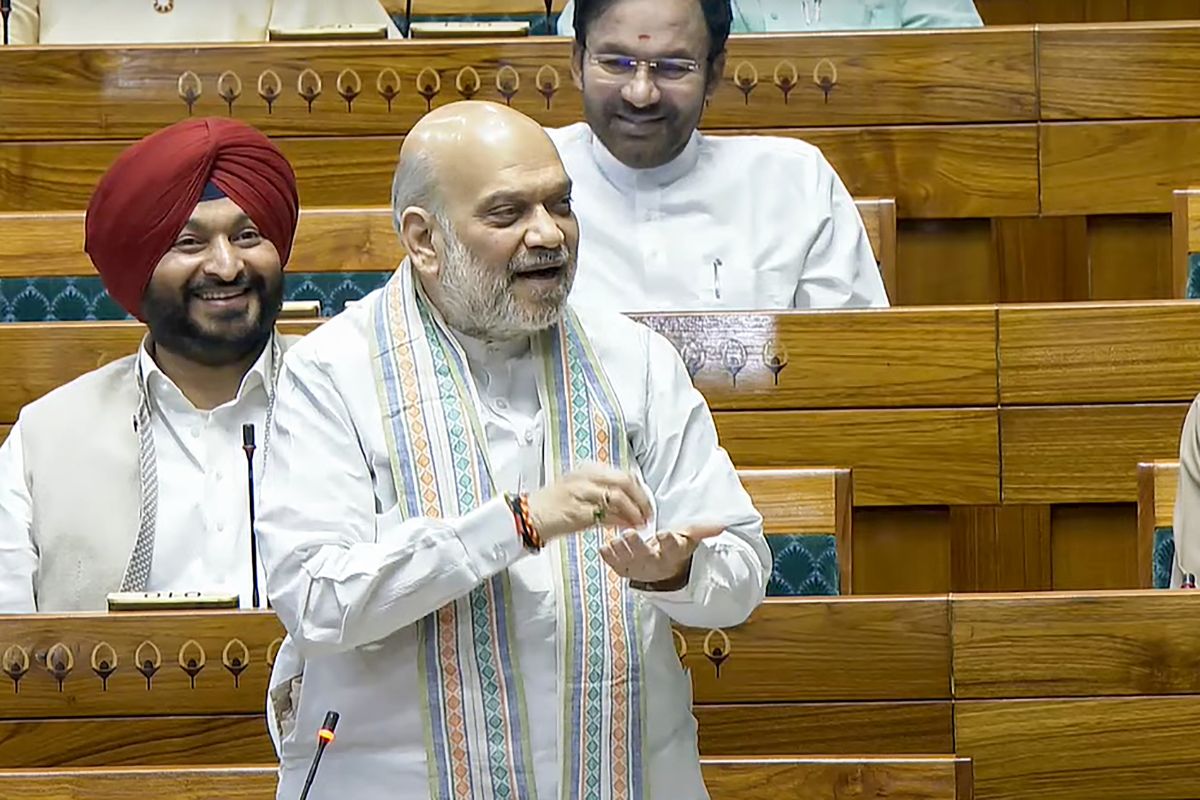
Every time Parliament discusses a new law, people often hear words such as Bill, First Reading, Standing Committee, Second Reading, Lok Sabha, Rajya Sabha and President’s assent. But what do these terms actually mean?
A Bill does not become law simply because a minister announces it or because one House of Parliament passes it. In India, the law-making process involves several stages designed to allow discussion, examination and voting.
The basic rule is simple: a Bill normally has to be passed by both Houses of Parliament and receive the President’s assent before it becomes an Act.
Here is how the process works.
1. First comes the idea for a new law
A law usually begins with a policy problem or a need to change an existing law. The government may decide that a new law is required, or that an existing law needs to be amended or removed. The proposal is then prepared in the form of a Bill.
A Bill is essentially a draft law. It contains the proposed legal provisions that Parliament is being asked to approve. Bills introduced by ministers are called Government Bills. Bills introduced by MPs who are not ministers are known as Private Members’ Bills.
This distinction is important because a Bill is only a proposal at this stage. It has no legal force merely because it has been introduced.
2. Where can a Bill be introduced?
For most Bills, the legislative process can begin in either the Lok Sabha or the Rajya Sabha.
However, there is an important exception: a Money Bill can be introduced only in the Lok Sabha. The Constitution also provides special procedures for financial legislation.
The Speaker of the Lok Sabha has the final authority to decide whether a Bill is a Money Bill when the question arises. This is one reason why the type of Bill matters when understanding the parliamentary process.
3. First Reading: The Bill enters Parliament
The first formal stage is generally called the First Reading.
At this stage, the member in charge of the Bill seeks permission to introduce it. Once the House agrees to the introduction, the Bill is formally introduced. The First Reading is therefore mainly about bringing the proposed law before the House. Detailed discussion does not normally happen at this stage.
After introduction, the Bill can move forward for more detailed examination.
4. The Bill may go to a Parliamentary Committee
This is one of the most important parts of the process, although not every Bill must necessarily go through a committee. A Bill may be referred to a Department-related Standing Committee, Select Committee or Joint Committee, depending on the circumstances and the decision of the House.
Committees allow MPs to examine a proposed law in greater detail than is usually possible during a normal debate in the House. They can examine the provisions clause by clause, consider amendments and, depending on the committee process, hear views or examine evidence relevant to the proposed legislation. A Select or Joint Committee can consider a Bill clause by clause and suggest amendments.
The committee's recommendations are important, but they are generally persuasive rather than automatically binding on Parliament. The House ultimately decides whether to accept the proposed changes.
Why are committees important? Parliament has limited time for detailed examination of every technical issue during a full House debate. Committees provide a smaller forum where MPs can study the details more closely.
For an ordinary citizen, the easiest way to understand this is: The House debates the big political and policy questions; committees can provide a more detailed examination of the proposed law.
5. Second Reading: The real debate begins
The Second Reading is a major stage in the journey of a Bill.
Members discuss the basic principles and purpose of the proposed legislation. The House may decide to take the Bill into consideration, refer it to a committee or circulate it for obtaining public opinion, depending on the procedure applicable to the Bill.
If the Bill proceeds, Parliament moves towards detailed consideration of its provisions. This is where the language of the proposed law matters.
MPs can debate individual provisions and propose amendments. The Bill can therefore change substantially from the version that was originally introduced.
6. Clause-by-clause examination
A Bill is normally divided into different clauses, with each clause dealing with a particular provision. During detailed consideration, members can discuss these clauses and propose amendments. The House then decides whether to accept or reject the proposed changes.
This stage is important because a law may have complicated effects on citizens, businesses, government departments or institutions.
A debate may therefore move beyond the broad question of “Should this law exist?” to much more specific questions such as:
What exactly will the law prohibit?
Who will be covered?
What powers will the government receive?
What penalties will apply?
When will the law come into force?
What rights or responsibilities will citizens have?
The detailed examination helps Parliament answer these questions before the Bill reaches its final vote.
7. Third Reading: Should Parliament pass it?
After detailed consideration and amendments, the Bill reaches the Third Reading. At this stage, the discussion is focused on whether the Bill, in its final form, should be passed. The House votes on the Bill. It can be passed or rejected.
According to the Lok Sabha's official explanation of the legislative process, the third stage is confined to discussion on the motion that the Bill be passed, followed by voting. If the House passes the Bill, the journey is still not over.
8. The Bill goes to the other House For an ordinary Bill, approval by only one House is not enough. If the Bill originated in the Lok Sabha, it normally goes to the Rajya Sabha. If it originated in the Rajya Sabha, it goes to the Lok Sabha. The second House examines and debates the Bill through its own parliamentary process.
The Constitution says that, subject to special provisions, a Bill is not considered passed by Parliament unless both Houses agree to it, either in the same form or with amendments agreed to by both Houses. This is why the Rajya Sabha remains an important part of India's law-making system even though the Lok Sabha has special powers in relation to Money Bills.
9. What happens if the two Houses disagree?
Sometimes the Lok Sabha and Rajya Sabha may not agree on a Bill. For certain ordinary Bills, the Constitution provides for a joint sitting of both Houses in specific circumstances.
This can happen, for example, when one House rejects a Bill passed by the other House, when the Houses finally disagree on amendments, or when more than six months pass without the second House passing the Bill, subject to the constitutional conditions.
However, a joint sitting is not available for every type of legislation. It does not apply to Money Bills or Constitution Amendment Bills. So, a disagreement between the two Houses does not automatically mean that Parliament will hold a joint sitting.
10. Money Bills follow a different route Money Bills have a special constitutional procedure. A Money Bill can be introduced only in the Lok Sabha.
After the Lok Sabha passes it, the Bill is sent to the Rajya Sabha. The Rajya Sabha cannot amend a Money Bill in the same way as an ordinary Bill. It can only make recommendations.
The Lok Sabha can accept or reject those recommendations.
The Rajya Sabha must return the Money Bill within 14 days. If it does not, the Bill is treated as having been passed by both Houses in the form in which the Lok Sabha passed it.
This gives the Lok Sabha a stronger position in financial legislation.
11. What happens after both Houses pass the Bill? Once a Bill has been passed by both Houses in the required manner, it is presented to the President of India for assent.
This is another constitutional step before a Bill becomes an Act.
Under Article 111, the President may assent to the Bill, withhold assent, or, in the case of a Bill other than a Money Bill, return it to Parliament for reconsideration. If Parliament passes the Bill again after reconsideration, the President cannot withhold assent.
There is therefore a final constitutional check after Parliament has completed its part of the legislative process.
12. When does a Bill become an Act?
This is the point many people misunderstand.
A Bill is not yet a law simply because Parliament has passed it.
Once the required parliamentary approval is complete and the President gives assent, the Bill becomes an Act of Parliament.
The Act then operates according to its commencement provisions.
In many cases, the Act may come into force on the date of presidential assent. But a law can also specify a different commencement date or provide for its provisions to come into force through a later notification, depending on what the legislation says.
So the journey can be simplified as: Idea → Bill → Introduction → Debate/Committee scrutiny → Detailed consideration → Vote → Other House → President’s assent → Act
What about Constitution Amendment Bills?
Constitution Amendment Bills have a different and more demanding procedure.
They require the special majority specified by Article 368, and certain amendments also require ratification by at least half of the State Legislatures.
They also cannot be dealt with through the ordinary joint-sitting mechanism used for certain deadlocks over ordinary Bills.
This distinction is important because not every Bill follows exactly the same route.
Why does the process take time? A law can affect millions of people. Parliament therefore has to balance speed with scrutiny.
A Bill may involve complicated questions relating to taxation, criminal law, the economy, national security, technology, education, health or citizens' rights.
That is why Parliament's legislative process contains several stages.
The purpose is not simply to produce a law quickly. It is also to give elected representatives an opportunity to debate the proposal, question the government, suggest changes and vote on the final text.
The committee system adds another layer of examination, while the second House provides another parliamentary forum for consideration.
What actually happens during a Parliament session?
A Parliament session is much broader than passing Bills.
The daily List of Business sets out the main items scheduled for consideration. Parliament also deals with questions to ministers, discussions, laying of government papers, financial business, resolutions and other parliamentary work.
This means that when Parliament is in session, MPs are not spending every hour voting on new laws.
Some days may involve extensive debate on a Bill. On other occasions, the House may focus on questions, government accountability, financial matters or other parliamentary business.
The legislative process is therefore only one part of the larger work of Parliament.
The bigger picture: Why should citizens understand this process?
Understanding how a Bill becomes law helps citizens understand what Parliament is actually doing.
A political announcement is not the same as a law.
A Bill being introduced is not the same as a Bill being passed.
A Bill being passed by one House is not necessarily enough.
And even after Parliament has completed the required voting process, the President's assent may still be required before the Bill becomes an Act.
This step-by-step system is designed to ensure that laws are not made through a single decision.
It gives Parliament several opportunities to debate, examine and change proposed legislation.
For citizens, the most important point is simple: When you hear that “the government has brought a new law”, it may still be only a proposal. The real legal change comes after the Bill completes the required parliamentary process and receives the necessary constitutional approval.
In one simple chart
1. Policy idea ↓ 2. Bill drafted ↓ 3. Bill introduced in Parliament ↓ 4. Debate / possible committee scrutiny ↓ 5. Clause-by-clause consideration and amendments ↓ 6. Third Reading and vote ↓ 7. Passed by the other House ↓ 8. President’s assent ↓ 9. Bill becomes an Act ↓ 10. Law comes into force according to its commencement provisions
- Digital Sansad, Lok Sabha — Introduction to the legislative process and “How Bill becomes an Act”.
- Digital Sansad, Lok Sabha — Frequently Asked Questions on Bills, Money Bills and stages of legislation.
- Constitution of India — Articles 107–111 covering introduction, passage, joint sitting, Money Bills and presidential assent.
- Rajya Sabha — Handbook for Members of Rajya Sabha, legislative procedure and Bills.
- Rajya Sabha — Law Making publication explaining the mechanism of law-making in Parliament.

Reader comments (0)
No comments yet. Be the first.