Supreme Court on CJP Protest: Shopkeepers May Get Compensation for Lost Livelihood
The Supreme Court declined an urgent hearing on the Central Park closure in Delhi but warned it could order compensation if traders and hawkers are unlawfully deprived of their livelihood by protests or restrictions.

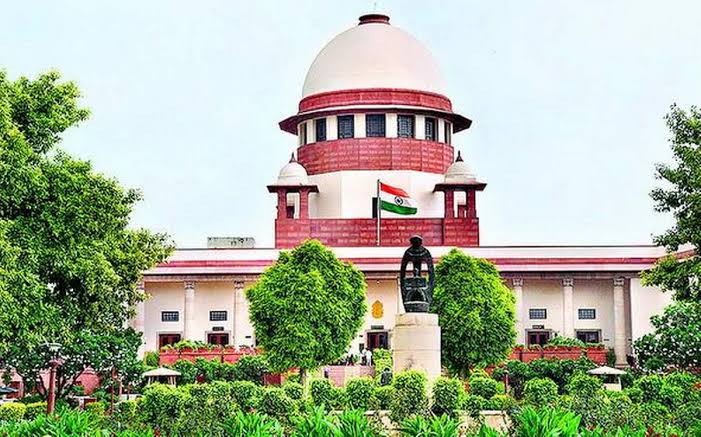
The Supreme Court of India has refused to hear urgently a petition challenging the New Delhi Municipal Council’s (NDMC) decision to close Central Park at Connaught Place in New Delhi ahead of a proposed protest by the Cockroach Janata Party (CJP).
However, the Court expressed concern about the impact of protests and security restrictions on small businesses, street vendors and daily-wage earners during the festive season. It indicated that compensation could be ordered if it finds that people were unlawfully deprived of their livelihood.
A bench comprising Chief Justice of India (CJI) Surya Kant and Justice Joymalya Bagchi made the observations on Friday, October 16, 2026. The Court said, “We hope better sense will prevail on everyone.”
The judges also highlighted the difficulties faced by families that depend on daily business income. The matter was listed for further hearing on October 26.
The Court's decision does not mean that the protest has been declared illegal or that the NDMC's closure order has been finally found unlawful. Instead, the judges declined to intervene urgently while signalling that the impact on local livelihoods would be an important consideration in the case.
Why did the Supreme Court mention peanuts and small shopkeepers?
During the hearing, Justice Bagchi observed that the right to protest, the sale of mungfali (peanuts) and concerns about law and order were interconnected.
The remark highlighted a simple but important reality: Connaught Place is not only a public gathering place. It is also a commercial area where thousands of people depend on customers visiting shops, restaurants, street stalls and other businesses.
A street vendor selling peanuts may earn only a small amount from each customer. A shopkeeper may need regular daily sales to pay rent, electricity bills, suppliers and employees. A restaurant must continue meeting its operating expenses even when customers stop coming.
If roads are blocked, public spaces are closed or security restrictions discourage visitors from entering the area, the impact can extend beyond the organisers and participants of a protest.
For a large business, losing one day's sales may be manageable. For a small vendor or a family-run shop, losing several days of income can affect the money available for food, rent and other essential expenses.
The Court's observation underlined that decisions about protests and public order can have consequences for ordinary people who are not participating in the demonstration.
What is the CJP protest about?
The proposed protest was organised by the Cockroach Janata Party under its “Lehra Do Tiranga” campaign. The demonstration was connected to opposition to the arrests of CJP leaders Ashutosh Ranka and Saurav Das and demands concerning Chief Election Commissioner Gyanesh Kumar and alleged irregularities in the revision of electoral rolls.
The protest was planned at Central Park in Connaught Place, a busy public and commercial area in the national capital.
Authorities imposed restrictions and ordered the park closed for October 16 and 17, citing concerns associated with the proposed gathering and public order.
The closure prompted legal challenges, including a petition raising concerns about the effect on businesses. The dispute therefore involves several competing interests: the ability of people to protest, the government's responsibility to maintain public order, and the livelihood of traders who depend on the area remaining accessible.
Why did traders approach the Supreme Court?
The plea was brought by traders' associations concerned about the economic consequences of repeated protests and restrictions around Connaught Place.
The petitioners argued that demonstrations, barricades and restrictions on access can reduce customer visits and cause substantial business losses, particularly during the festive season.
According to reporting on the case, the traders' side cited estimated daily losses of ₹200 crore to ₹250 crore. This is a figure presented in connection with the petition and should not be treated as an independently verified calculation of actual losses.
The traders wanted the Court to intervene over the closure of Central Park and the wider impact of protest-related restrictions on businesses.
The Supreme Court did not grant an urgent hearing on the challenge to the closure order. However, it made clear that the effect on small shopkeepers, hawkers and other people dependent on daily earnings could not be ignored.
The next hearing will provide an opportunity for the Court to examine the issues further.
Can the Supreme Court order compensation for lost business?
The Court indicated that it could consider compensation if it finds that people were unlawfully deprived of their livelihood.
It referred to its power under what is known as constitutional tort jurisdiction.
In simple English, a tort is a civil wrong that causes harm to another person and may give rise to a legal claim. Constitutional tort jurisdiction refers to the power of constitutional courts to grant remedies, including monetary compensation in appropriate cases, when a violation of constitutional rights by the state or its authorities is established.
For example, courts have awarded compensation in certain cases involving unlawful detention, custodial abuse or violations of fundamental rights by public authorities.
In the Connaught Place matter, the Court has indicated that it may consider compensation if the evidence establishes the necessary legal grounds. It has not yet ordered the government or NDMC to pay traders.
Businesses would not automatically receive compensation simply because a protest took place or sales declined. The Court would need to consider the legal basis for compensation, the conduct of the authorities, the nature of any unlawful deprivation and the evidence of loss.
This distinction is important: the Court has warned that compensation may be possible, not announced that compensation has already been awarded.
Does every business affected by a protest have a right to compensation?
No. A fall in sales does not automatically establish a legal right to compensation.
Businesses can experience lower sales for many reasons, including weather, changing customer demand, traffic restrictions and wider economic conditions. A claim against public authorities would require more than showing that business was affected.
Relevant questions may include:
Was the restriction imposed under lawful authority?
Was it necessary and proportionate to the public-safety concern?
Did the restriction unlawfully interfere with the claimant's livelihood or other protected rights?
Can the claimant show a clear connection between the restriction and the loss?
Is compensation an appropriate legal remedy in the circumstances?
The Court will need to assess the facts and applicable law before deciding whether any compensation is justified.
The case could help clarify how courts should balance public-order decisions with the economic interests of people whose livelihoods depend on access to a public area.
What is the right to protest under the Constitution?
The Constitution of India protects freedom of speech and expression under Article 19(1)(a). Article 19(1)(b) protects the right to assemble peacefully and without arms.
These rights allow citizens to express disagreement with government policies, raise public concerns and participate in democratic debate.
However, the right to assemble is not unlimited. Article 19(3) permits reasonable restrictions on peaceful assembly in the interests of the sovereignty and integrity of India and public order.
Authorities can therefore impose lawful and proportionate restrictions where necessary to manage crowd safety, prevent violence or protect the public.
But the existence of a public-order concern does not automatically make every restriction justified. Authorities must act within the law, and courts can examine whether the measures taken were legally appropriate.
The Connaught Place dispute brings this balance into focus: how can authorities manage a proposed protest without imposing unnecessary restrictions on the surrounding public and businesses?
Can authorities close a public park to prevent a protest?
Authorities may have legal powers to regulate access to public spaces, subject to the law governing the area and the circumstances involved.
For example, a temporary closure may be considered when officials believe a gathering could create a serious safety or law-and-order problem. But the legality of a particular closure depends on the authority used, the reasons given, the scope of the restriction and whether the measure is proportionate.
In this case, the NDMC's closure of Central Park has been challenged. The Supreme Court has not yet finally ruled that the order was unlawful or that it was justified.
The legal question is not simply whether authorities can ever close a public park. It is whether the specific decision in this case was lawful and proportionate, and what consequences may follow if the Court finds that it unlawfully deprived people of their rights or livelihoods.
How are Connaught Place businesses affected by protests?
Connaught Place, commonly called CP, is one of Delhi's major commercial centres. It attracts office workers, shoppers, tourists and restaurant customers.
Businesses in the area rely heavily on people being able to reach shops and restaurants without excessive disruption. When barricades, road closures or security checks make access difficult, some customers may decide to visit another location.
National Restaurant Association of India treasurer Manpreet Singh said that repeated protests around Connaught Place had affected businesses, with some establishments recording zero sales on certain days.
He urged political parties to choose designated protest venues several kilometres away from major commercial areas, arguing that reduced footfall affects restaurants and retailers as well as the people they employ.
His comments reflect the concerns of businesses, but individual claims about lost sales and the scale of the wider economic impact would need supporting records to be independently verified.
The broader issue is how public demonstrations can be organised while minimising unnecessary disruption to people who are trying to work, shop or earn their daily income.
Could the case change how protests are organised in Delhi?
The outcome could influence how authorities assess the consequences of protest-related restrictions in busy commercial districts.
If the Court ultimately finds that a public authority imposed a disproportionate or unlawful restriction that deprived people of their livelihood, it could consider an appropriate remedy under the law.
The case may also encourage authorities to assess whether security arrangements can be designed to protect public order while keeping businesses accessible wherever possible.
That could involve clearer traffic plans, alternative routes, designated protest areas and better communication with residents and business owners. These are possible practical approaches, not specific directions already issued by the Court in this matter.
The case does not establish that all protests must take place away from commercial areas. Any such requirement would need to come from applicable law or a valid order made by the competent authority.
What happens next?
The Supreme Court is scheduled to take up the matter on October 26. The legal questions include the challenge to the NDMC's closure order and the concerns raised by traders over the impact of protest-related restrictions on their livelihoods.
The Court may examine whether the authorities acted lawfully, whether the restrictions were proportionate and whether any legal remedy is warranted if deprivation of livelihood is established.
Until then, neither compensation nor a final ruling on the legality of the closure should be assumed.
The bigger picture
The case highlights a difficult question for any democracy: how can citizens exercise their right to protest while ensuring that ordinary people are not unfairly burdened by the resulting restrictions?
Peaceful demonstrations are an important part of democratic life. At the same time, street vendors, shopkeepers, restaurant workers and daily-wage earners have their own legitimate interests, especially when their families depend on regular income.
The Supreme Court's remarks suggest that public-order decisions must take these economic consequences seriously. Its final decision will determine whether the restrictions in this case crossed a legal boundary and whether any compensation or other relief is justified.
The bottom line: The Supreme Court has not yet awarded compensation or finally ruled on the Central Park closure. It has, however, signalled that if traders and hawkers are found to have been unlawfully deprived of their livelihood, it may consider compensation under its constitutional powers.
Report a mistake
Related stories
Gujarat ATS Takes Salim Ismail Dola into Custody in ₹438-Crore Vadodara Drug Case
BMC Should Repost Dia Mirza’s Pollution-Free Diwali Video: Deputy Mayor Sanjay Ghadi
Gujarat CM Bhupendra Patel Inaugurates ₹48.22-Crore Modern Hospital in Vapi

Reader comments (0)
No comments yet. Be the first.