BJP Targets Student Leader Neha Bora Over ‘Bangladesh Showed Us the Way’ Remark
The BJP has criticised student leader Neha Bora over remarks praising Bangladesh's student-led uprising, claiming they point to a push for political change in India. Bora says the struggle is about democratic and voting rights.

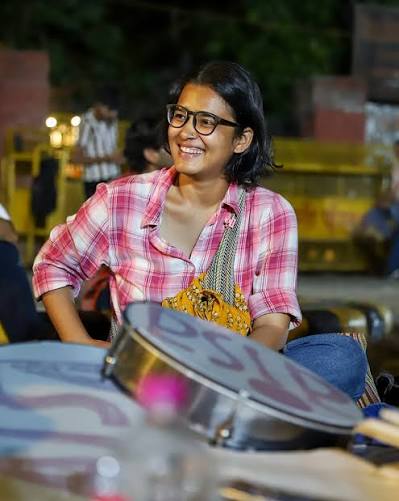
Student activist Neha Bora has come under fire from the Bharatiya Janata Party (BJP) after a video of her discussing Bangladesh's student-led uprising circulated on social media.
In the clip, Bora praises the movement in Bangladesh for inspiring young people in India to speak up for democratic and voting rights. BJP leaders have interpreted her remarks as evidence that opposition-linked activists want to repeat the political upheaval that led to the removal of former Bangladeshi Prime Minister Sheikh Hasina in August 2024.
However, the video also contains Bora's explanation that the movement she supports is about restoring democratic rights and challenging alleged irregularities in India's electoral process. Her comments have therefore become the centre of a political dispute over the difference between peaceful democratic protest and an attempt to overthrow an elected government.
The available remarks do not, by themselves, establish that Bora or the opposition is planning to overthrow the Indian government.
What exactly did Neha Bora say?
Neha Bora is the national president of the All India Students' Association (AISA) and a doctoral student at Jawaharlal Nehru University's School of Arts and Aesthetics. She studied at Delhi University before pursuing further studies at JNU.
In the video shared by BJP spokesperson Pradeep Bhandari, Bora says that the youth-led movement seen in India first began in Bangladesh. She congratulates Bangladeshi student activists for inspiring young people in India and expresses solidarity with their struggle.
She also draws a connection between the two countries' movements, saying that young people in both places are fighting for democratic and voting rights. She refers to opposition to religious extremism and expresses hope that activists from India and Bangladesh can work together for a better South Asia.
Her comments have become controversial because of the comparison with Bangladesh's political upheaval. However, the statements quoted in the reports also refer to democratic rights, voting rights and solidarity between student movements. They do not, by themselves, establish a plan to remove India's government by force or through an unlawful process.
Why is Bangladesh's 2024 uprising important?
Bangladesh witnessed a major student-led uprising in 2024. The protests began over government job quotas and later grew into a wider movement against Prime Minister Sheikh Hasina's government.
On August 5, 2024, Hasina resigned and left Bangladesh after weeks of protests and deadly unrest. An interim government was subsequently formed. The crisis followed a violent crackdown and widespread public anger over the government's handling of the demonstrations.
The events became a powerful example of how student protests can grow into a nationwide political movement. They also came at a high human cost, with many people killed or injured during the unrest.
Bora's reference to Bangladesh has therefore attracted attention in India, where student groups and opposition parties have been protesting over alleged irregularities in electoral rolls and demanding the resignation of Chief Election Commissioner Gyanesh Kumar.
The two situations are not identical. Bangladesh's protests developed into a national uprising that led to the prime minister's departure, while the Indian protests described in the reports concern electoral rights and demands directed at the Election Commission.
Pradeep Bhandari accuses Rahul Gandhi and Congress of seeking regime change
BJP spokesperson Pradeep Bhandari shared the video on social media and described Bora as Rahul Gandhi's “poster girl”. He claimed that her remarks showed that the opposition's objective was not simply political protest but regime change similar to what happened in Bangladesh.
Bhandari further accused Rahul Gandhi and the wider Congress ecosystem of threatening India's democracy and constitutional system. These are political allegations made by the BJP spokesperson; the video itself does not independently prove that Rahul Gandhi or Congress is planning an unlawful takeover of the government.
The BJP's argument centres on Bora's praise for the Bangladeshi movement and her statement that it had shown the way to young people in India. The party says the comparison is evidence of a wider political agenda.
Critics of that interpretation argue that praising a protest movement or drawing lessons from another country's political experience does not automatically amount to supporting the same outcome in India.
Congress hits back as political row grows The controversy has also triggered a wider exchange between the BJP and Congress. According to The Times of India, Congress criticised the BJP for using the language of democracy while attacking young protesters and their right to raise political concerns.
The dispute comes amid demonstrations demanding action over alleged irregularities in the Special Intensive Revision (SIR) of electoral rolls. Opposition leaders have questioned the process and demanded the resignation of Chief Election Commissioner Gyanesh Kumar, while the Election Commission has faced political scrutiny over the revision exercise.
Bora has participated in these protests, making her comments about Bangladesh part of the larger debate over youth activism, voting rights and the limits of political dissent.
What does the controversy mean?
The central question is whether Bora's words should be understood as support for democratic protest or as an endorsement of the political outcome in Bangladesh.
Her critics argue that the reference to Bangladesh is troubling because the protests there ultimately led to the removal of an elected government. Her reported remarks, however, also focus on democratic rights, voting rights and cooperation between young activists.
A fair assessment requires looking at the full context of her comments rather than treating one phrase as conclusive proof of a wider conspiracy.
The controversy also shows how international events can influence political debates at home. Student movements often share ideas across borders, but the goals, methods and political conditions of each movement need to be examined separately.
The key takeaway: Neha Bora's comments have triggered a political clash, with the BJP alleging a regime-change agenda and the debate centred on whether her praise of Bangladesh's student movement represents inspiration for democratic protest or support for a similar political outcome in India. The available video statements alone do not establish the BJP's broader allegations.
Report a mistake
Related stories
Gujarat ATS Takes Salim Ismail Dola into Custody in ₹438-Crore Vadodara Drug Case
BMC Should Repost Dia Mirza’s Pollution-Free Diwali Video: Deputy Mayor Sanjay Ghadi
Gujarat CM Bhupendra Patel Inaugurates ₹48.22-Crore Modern Hospital in Vapi
Reader comments (0)
No comments yet. Be the first.