RBI Repo Rate Hike: Will Farmers and Livestock Owners Pay More for Loans?
The RBI’s 25-basis-point repo rate hike to 5.50% may increase borrowing costs for some agriculture-related loans, but KCC loans covered by government interest-support schemes are treated differently.

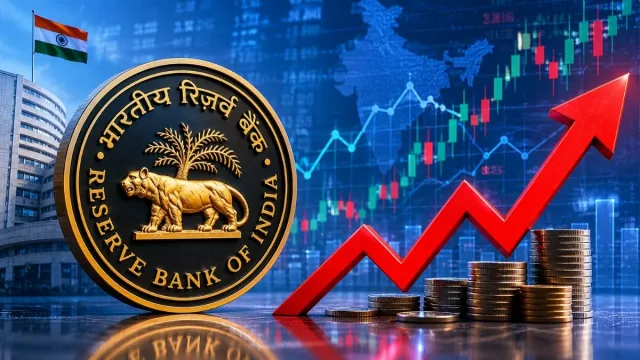
The Reserve Bank of India (RBI) has increased the policy repo rate by 25 basis points, from 5.25% to 5.50%, in its Monetary Policy Committee meeting announced on October 7, 2026. It is the first repo-rate increase since February 2023 and marks a shift after a long period of monetary easing. The RBI has also moved its policy stance from “neutral” to “calibrated tightening”.
The immediate question for millions of farmers is simple:
Will this make farm loans, Kisan Credit Card (KCC) loans, tractor loans and loans for dairy and animal husbandry more expensive?
The answer is not the same for every agricultural loan.
A repo-rate increase can raise the cost of borrowing for loans whose interest rates are linked to an external benchmark or are otherwise repriced by banks. But government-supported agricultural credit schemes have separate interest-subvention arrangements, which can protect eligible farmers from the full impact of a change in the RBI's policy rate.
That distinction is important.
First, what is the repo rate?
The repo rate is the rate at which the RBI lends money to banks.
When the RBI raises the repo rate, borrowing from the central bank becomes more expensive for banks. Depending on the type of loan and the benchmark used by the bank, this can eventually affect lending rates for borrowers.
RBI rules require banks to link certain categories of new floating-rate loans to external benchmarks. The RBI's framework allows the policy repo rate to be one such benchmark.
This is why a repo-rate hike can directly matter for some borrowers.
But agriculture is different because several farm-credit schemes receive government interest support.
Does the repo-rate hike automatically increase KCC interest?
No. Not automatically.
The Kisan Credit Card is a major source of institutional credit for farmers. It was designed to provide timely and relatively affordable credit for cultivation and other agricultural needs. The government also provides interest support on eligible short-term agricultural loans under the Modified Interest Subvention Scheme (MISS).
The Finance Ministry explains that the MISS provides interest subvention on eligible short-term KCC loans. The scheme has traditionally provided credit at a concessional rate of 7% per year, with an additional benefit for farmers who repay on time, effectively reducing the interest burden further for eligible borrowers. The Union Budget 2025-26 announced an increase in the MISS lending limit from ₹3 lakh to ₹5 lakh.
This means a farmer should not assume that today's repo-rate increase automatically means his or her eligible KCC loan will immediately become 25 basis points more expensive.
The actual treatment depends on the particular KCC facility, the applicable government scheme and the terms under which the bank has sanctioned the loan.
Why the ₹5 lakh KCC figure needs some explanation
The government's 2025-26 Budget announced an increase in the KCC concessional-credit limit under MISS from ₹3 lakh to ₹5 lakh.
However, government implementation documents show that the expansion involved administrative and scheme-related steps. Therefore, farmers should check the current applicable limit and interest terms with their bank rather than assuming that every KCC account automatically carries the same ₹5 lakh concessional benefit.
This is an important distinction because KCC limit, interest rate and interest subsidy are not exactly the same thing.
What happens to loans outside the KCC benefit?
This is where the repo-rate hike can become more relevant.
Suppose a farmer wants a loan to buy agricultural machinery or expand a commercial farming operation. The loan may be structured as an agricultural term loan, equipment loan or another type of bank finance.
If that loan is priced using a benchmark that responds to changes in market interest rates, the bank may eventually increase the interest rate.
RBI regulations allow banks to use external benchmarks for certain floating-rate loans, including the RBI repo rate. The actual lending rate generally includes the benchmark plus the bank's applicable spread.
Therefore, a tractor or agricultural-equipment loan should not automatically be described as becoming more expensive solely because the RBI raised the repo rate.
The correct question is: What benchmark is the loan linked to, and what does the loan agreement say about rate resets?
What about tractors, cultivators and seed drills?
Agricultural machinery is increasingly important for Indian farmers because mechanisation can reduce dependence on manual labour and improve productivity.
But financing for machinery can come through different channels.
A farmer buying a tractor, harvester, cultivator, seed drill, thresher or other equipment may receive finance under a particular agricultural loan product or a machinery/equipment loan offered by a bank or financial institution.
If the loan carries a floating interest rate linked to a benchmark affected by monetary policy, the repo-rate increase can eventually raise the borrowing cost.
But if the financing is covered by a separate government subsidy, interest-support programme or fixed-rate arrangement, the effect can be different.
Therefore, there is no single “farm machinery loan rate” that automatically moves up whenever the RBI changes the repo rate.
Farmers should check: the interest rate at the time of sanction;
whether the rate is fixed or floating;
the benchmark used by the lender;
the reset frequency;
any government subsidy or interest support; and
the processing and other charges.
What about dairy farmers and animal husbandry?
The impact is similarly mixed for people involved in dairy farming, poultry, fisheries and other allied activities.
KCC facilities have been extended to animal husbandry and fisheries farmers for working-capital requirements. The government has also provided interest-support arrangements for eligible loans under these activities.
Therefore, an eligible farmer taking credit under a government-supported KCC arrangement should not assume that the entire 25-basis-point repo-rate increase will immediately be passed on to that loan.
However, a separate commercial bank loan taken for dairy infrastructure, livestock expansion, machinery, sheds, equipment or a larger business operation may be priced differently.
If such a loan is floating-rate and linked to a benchmark affected by monetary policy, borrowing costs can rise.
Why the difference matters for farmers
This distinction is especially important for small and marginal farmers.
A farmer may have several types of borrowing at the same time:
KCC crop loan: May receive government interest support if it meets the scheme's eligibility conditions.
KCC for allied activities: Animal husbandry and fisheries working-capital credit can also fall under specific KCC and interest-support arrangements.
Tractor loan: Terms depend on the particular financing product and lender.
Agricultural machinery loan: Interest may vary according to the bank's loan product, benchmark and applicable subsidy.
Commercial dairy or farm-business loan: Usually needs to be examined separately from subsidised short-term KCC credit.
So, saying “RBI has increased the repo rate, therefore every farmer's loan will become expensive” would be an oversimplification.
Why has the RBI raised the repo rate now?
The October 2026 rate hike comes after a long period in which the RBI had been cutting or holding interest rates.
The latest increase takes the repo rate to 5.50%, with the RBI also changing its policy stance to “calibrated tightening”. The decision comes against a backdrop of renewed inflation risks and global economic uncertainty.
The RBI has also raised its FY2026-27 growth forecast to 7.1%, while increasing its inflation projection to 5.2%, according to reports on the October policy decision.
In simple words, the RBI is trying to prevent inflationary pressures from becoming too strong while maintaining economic growth.
Will existing farmers' loans immediately become expensive?
Not necessarily.
This is another important point.
A change in the repo rate does not mean that every existing loan's interest rate changes on the same day.
The effect depends on the loan agreement and benchmark.
For loans linked to an external benchmark, changes can transmit more quickly. For loans linked to internal benchmarks such as MCLR, changes may occur according to the bank's reset mechanism. RBI material explains that different lending categories can have different benchmark and reset arrangements.
Government-supported loans can also have their own prescribed interest rates and subsidy mechanisms.
Therefore, borrowers should look at their sanction letter and loan statement before assuming that their EMI or interest rate will increase.
A simple example
Suppose a farmer has taken a floating-rate machinery loan at an interest rate linked to an external benchmark.
If the benchmark rises because of the RBI's repo-rate increase, the bank may revise the loan rate according to the loan's reset terms.
But suppose another farmer has an eligible KCC loan under a government interest-support scheme.
That farmer's effective interest burden is determined not simply by the RBI repo rate, but also by the government's interest-subvention rules and the terms of the KCC facility.
This is why two farmers can see very different effects from the same RBI policy decision.
What should farmers do now?
Farmers should not panic simply because the repo rate has increased.
Instead, they should ask their bank five basic questions:
Is my loan fixed-rate or floating-rate?
Which benchmark is linked to my loan?
When can the bank reset my interest rate?
Am I receiving any government interest subsidy or subvention?
Will my EMI change, or will the loan tenure change?
These questions can give a much clearer picture than simply looking at the RBI repo rate.
The bigger picture for rural borrowers
The RBI's decision is important because agricultural credit is not limited to crop loans.
Farmers increasingly borrow for tractors, irrigation systems, storage, dairy units, livestock, poultry, fisheries, farm machinery and other allied activities.
At the same time, the government is trying to expand institutional agricultural credit and reduce farmers' dependence on informal lenders.
Official data show the scale of the KCC system: the Economic Survey reported 7.72 crore operative KCC accounts with outstanding balances of about ₹10.20 lakh crore as of March 31, 2025.
That makes the question of interest rates important not only for individual farmers but for the wider rural economy.
Bottom Line
The RBI's 25-basis-point repo-rate hike to 5.50% can increase borrowing costs for some floating-rate agricultural and allied-sector loans.
But it does not mean that every KCC loan will automatically become 25 basis points more expensive. Eligible KCC borrowers benefit from government interest-support arrangements, while loans for machinery, tractors, commercial dairy operations and other activities may follow different pricing rules.
The real impact on a farmer therefore depends on the type of loan, the lender, the benchmark, the interest-subvention scheme and the loan agreement.
For farmers, the most important message is simple: Do not judge your loan only by the RBI repo rate. Check the actual interest rate, benchmark and subsidy applicable to your loan.
- Reserve Bank of India — October 2026 Monetary Policy decision and lending-rate framework.
- Reserve Bank of India — Framework for external benchmark-linked lending rates.
- Department of Financial Services, Ministry of Finance — Agriculture Credit and Kisan Credit Card information.
- Department of Financial Services, Ministry of Finance — Modified Interest Subvention Scheme and KCC limit information.
- Union Budget 2025-26 — implementation status of the KCC/MISS enhancement.
- Economic Survey — agricultural credit and KCC data.
- RBI — Interest Subvention Scheme for KCC facilities for fisheries and animal husbandry.
Report a mistake
Related stories
Jio Platforms IPO: Mukesh Ambani’s Digital Giant Attracts $77 Billion in Bids

Odisha CM Mohan Charan Majhi to Attend India Chem 2026 in Mumbai

Marco Rubio Visits Reliance’s Jamnagar Refinery, Discusses Energy and Technology Partnerships

Reader comments (0)
No comments yet. Be the first.